Rudolfs Bangerski
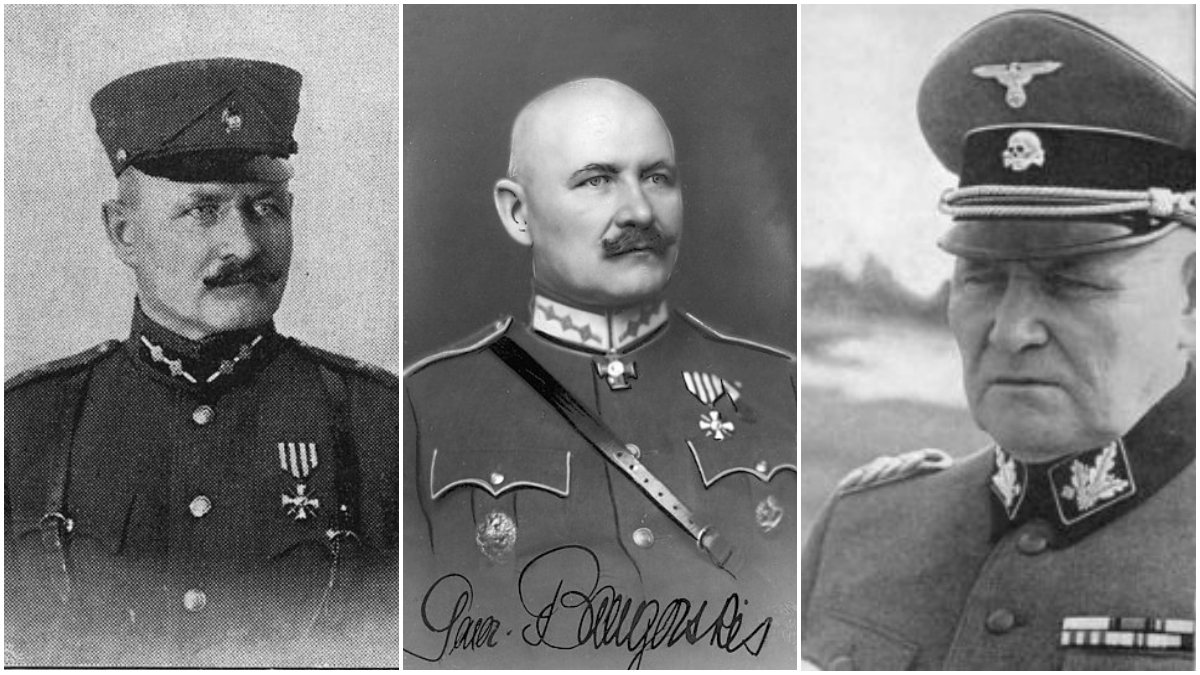
Lt. Gen Rudolfs Bangerski was born in July 1878 in in Taurupe, Latvia. Joining the Imperial Russian Army in July 1895 as a recruit, he passed out of the Riga NCO battalion and served as a sergeant in the 145th (Novocherkassk) Infantry Regiment in St. Petersburg for a year before attending officer training and joined the 93rd (Irkutsk) Infantry Rgt as an ensign in August 1901. Serving in the Russo-Japanese War in Manchuria with the 36th (Orla) Rgt, a unit he remained with as a field officer until 1912, he was a captain at the Nicholas War Academy in Petersburg when the Great War kicked off and he joined first the 4th Army Staff and then the 5th Army staff. Helping in recruiting the first https://skyforger.lv/en/albums/stories/latvian-riflemen/ Latvian Rifle battalions in 1915, by the Revolution he was colonel of the 17th Siberian Rgt. Cashiered in March 1918, he fell in with the Whites in Siberia and by the fall of 1918 he was Maj. Gen of the 12th Ural Division and, in 1919, Lt. Gen. of the III Ufa Rifle Corps. Escaping the collapse, he lived in exile in Harbin with his men for a time and returned to Latvia in late 1921. Minted as a colonel with the new Latvian Army in 1924, he eventually served as a divisional commander, commandant of the war academy and minister of war until he retired in 1937 at age 59, a full general. Avoiding arrest by the NKVD when the Soviets occupied Latvia in 1940, he eventually cast his lot with the Germans and in 1943 at age 65 was given a position in the Waffen SS as Inspector-General of the Latvian Legion with the rank of SS-Gruppenführer (Lt. Gen) but didn’t lead any units in combat. Captured by the British in Lubeck in May 1945, he was held as a POW for a year then released, settling in Oldenburg in the British occupation zone. He passed in an automobile accident in 1958 in Oldenburg and is today celebrated in Latvia.