Belgian coastal
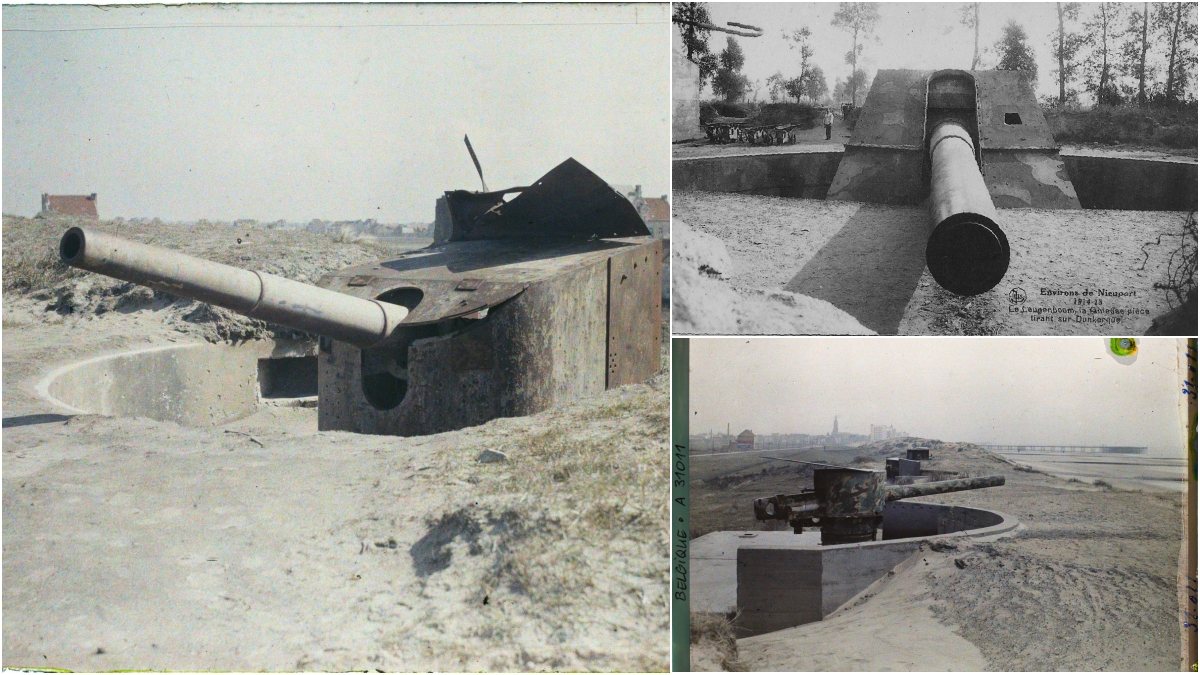
During the Great War, the Germans established extensive coastal artillery, managed by the Marinekorps Flandern under Admiral Ludwig von Schröder, to defend occupied Belgium and its submarine bases at Zeebrugge and Ostend. These defenses included massive 15 inch SK L/45 “Lang Max” (the most powerful German naval gun of World War I) and 12 inch SK L/50 guns, such as the Batterie Pommern and Kaiser Wilhelm II, respectively, capable of firing 37 km out to sea, with many positions (e.g., Battery Aachen) built in concrete. The Germans constructed no less than 34 batteries along the coast in the 20 miles between Knokke-Heist and Middelkerke alone.