Category Archives: weapons

USCG Out There Getting it Done Around the Globe with Ancient Hulls

The U.S. Coast Guard is very active around the globe recently, featuring ships that would easily be considered floating museums in any other first or second world fleet, but, rather than having these old girls dockside for tours and ceremonies, the USCG is Sempering that Paratis, so to speak.

Polar Star

The U.S. Coast Guard Cutter Polar Star (WAGB 10) began icebreaking operations in the Southern Ocean in support of Operation Deep Freeze 2026 and marked her 50th year of commissioned service last week by freeing and escorting a 17,000-ton cruise ship trapped in pack ice.

USCGC Polar Star (WAGB 10) escorts an Australian-owned cruise ship out of pack ice in the Ross Sea after the vessel requested assistance amid Operation Deep Freeze 2026, Jan. 17, 2026. Pacific Air Forces operates on a 24-hour basis to provide the U.S. National Science Foundation with complete joint operational and logistic support for Operation Deep Freeze. (U.S. Coast Guard photo by Petty Officer 2nd Class Christopher Bokum) 260117-G-FN033-1008

The Australian-owned cruise ship Scenic Eclipse II contacted Polar Star at approximately 11 p.m., local time, Friday, after becoming beset in pack ice roughly eight nautical miles from McMurdo Sound. Polar Star’s crew conducted two close passes to break the vessel free, then escorted it approximately four nautical miles to open water.

“At 50 years old, Polar Star remains the world’s most capable non-nuclear icebreaker,” said Cmdr. Samuel Blase, Polar Star’s executive officer. “That’s a testament to the crews that have maintained it over the decades. With years of service left to give, Polar Star will continue to guide the way in the high latitudes well into the future.”

USCGC Polar Star (WAGB 10) crew members pose for a group photo while the cutter sits hove-to in the Ross Sea during Operation Deep Freeze 2026, Jan. 12, 2026. The cutter turns 50 years old on Jan. 17, 2026, amid Operation Deep Freeze, which is a joint service, inter-agency support operation for the National Science Foundation that manages the United States Antarctic Program. (U.S. Coast Guard photo by Petty Officer 2nd Class Christopher Bokum) 260112-G-FN033-4120

Commissioned 17 January 1976, Polar Star remains in service with a combination of parts salvaged from her late sister, Polar Sea, out of service since 2010, but still afloat in mothball status in Suisun Bay, and yearly lengthy yard periods (she just finished a 175-day SLEP at Mare Island Dry Dock last summer, a yard which sadly closed on Dec. 31 2025).

She won’t be retired until a new heavy icebreaker arrives in USCG red as part of the Polar Security Cutter program in 2030 (maybe).

She is on her 29th deployment to Antarctica in support of Operation Deep Freeze, leaving her Seattle homeport in November, and is slated to return home later this year.

Vigilant

The 210-foot Reliance-class medium endurance cutter USCGC Vigilant (WMEC 617) returned to her Cape Canaveral homeport last Friday after a 33-day patrol in the Caribbean Sea supporting Operations Pacific Viper (including transits through the Panama Canal) and Southern Spear.

Notably, she returned to the U.S. with an impounded “Shadow Fleet” tanker, with the assistance of a Navy MH-60S from the “Tridents” of HSC-9.

During the patrol, Vigilant escorted a motor tanker, which was seized by a U.S. Coast Guard tactical boarding team with support from the Department of War, for operating as a vessel without nationality in the Caribbean Sea. Vigilant’s crew coordinated with naval and law enforcement partners to transfer personnel and provisions to the tanker. A law enforcement team from Vigilant boarded the vessel to provide security during the 600-nautical-mile transit to the United States.

U.S. Coast Guard Cutter Vigilant (WMEC 617), right, sails in the Western Atlantic Ocean while escorting a motor tanker after a right of visit boarding, Jan. 7, 2026. Vigilant escorted the motor tanker, which was seized by a Coast Guard tactical boarding team with support from the Department of War, for operating as a vessel without nationality in the Caribbean Sea. (U.S. Navy Photo)

U.S. Coast Guard Cutter Vigilant’s (WMEC 617) small boat crew comes alongside a motor tanker in the Atlantic Ocean, Jan. 7, 2026. Vigilant escorted the motor tanker, which was seized by a Coast Guard tactical boarding team with support from the Department of War, for operating as a vessel without nationality in the Caribbean Sea. (U.S. Coast Guard photo by Petty Officer 2nd Class Brandon Feehery) 260107-G-G0100-1001

U.S. Coast Guard crewmembers transfer from the Coast Guard Cutter Vigilant (WMEC 617) to a motor tanker by a helicopter crew assigned to U.S. Navy Helicopter Sea Combat Squadron 9 in the Atlantic Ocean, Jan. 7, 2026. Vigilant escorted the tanker, which was seized by a joint Coast Guard and Department of War team for conducting illicit activities in the Caribbean Sea. (U.S. Coast Guard photo by Petty Officer 2nd Class Brandon Feehery) 260107-G-G0100-1003

Valiant was commissioned in 1964 (not a misprint) and had her mid-life refit in 1989-90– some 36 years ago at this point.

Talk about golden years.

Hickory

The USCGC Hickory (WLB 212), a 225-foot Juniper-class seagoing buoy tender, arrived at her new homeport in Guam on 14 January, following a more than 13,000-mile transit over 71 days from the U.S. Coast Guard Yard in Baltimore via the Panama Canal.

The USCGC Hickory (WLB 212), a 225-foot Juniper-class seagoing buoy tender, arrives in Apra Harbor as it comes to their new homeport in Guam on Jan. 14, 2026, following a more than 13,000-mile transit over 71 days from the U.S. Coast Guard Yard in Baltimore through the Panama Canal. After an extended Major Maintenance Availability at the Yard, part of the In-Service Vessel Sustainment Program that modernizes the entire Juniper-class fleet with hull repairs, system upgrades, and replacement of obsolete equipment, the Hickory is now fully revitalized. (U.S. Coast Guard photo by Chief Warrant Officer Muir)

Hickory, commissioned in 2003, spent the first half of her career as “The Kenai Keeper” and “Bull of the North” while stationed in Alaska and has recently capped an extensive and lengthy modernization at the Coast Guard Yard in Baltimore that will steel her for the next 20 years.

Hickory is the most forward-deployed Juniper in the Pacific, joining sisters USCGC Juniper (WLB 201) and Hollyhock (WLB 214), both homeported in Honolulu. In addition to tending hundreds of aids to navigation, WLBs in the region regularly complete 40-50-day Operation Blue Pacific patrols of Oceana with Allied ship riders aboard, important hearts-and-minds stuff.

While not romantic, these large WLBs have often clocked in on exercises and operations supporting SOCOM, the Marines, and the gray-hulled fleet. They have also zipped through the Northwest Passage and conducted long-ranging LE patrols when needed.

If things go squirrely, say with non-nation actors, pirates, or other rogues in those areas that a small group of pipe hitters could fix and naval assets are not available, some may see NG SF ODAs or the Coast Guard’s own MSST units carried from buoy tenders as a low-tech option. They have room for an Mk 38 (which isn’t installed) and carry a few .50 cals and small arms as well.

The USCGC Hickory (WLB 212), a 225-foot Juniper-class seagoing buoy tender, arrives in Apra Harbor as it comes to their new homeport in Guam on Jan. 14, 2026, following a more than 13,000-mile transit over 71 days from the U.S. Coast Guard Yard in Baltimore through the Panama Canal. After an extended Major Maintenance Availability at the Yard, part of the In-Service Vessel Sustainment Program that modernizes the entire Juniper-class fleet with hull repairs, system upgrades, and replacement of obsolete equipment, the Hickory is now fully revitalized. (U.S. Coast Guard photo by Chief Warrant Officer Muir)

C-series BHP, is that you?

I’ll fight to the death that the pinnacle of Browning Hi-Power production was the C-series guns made for the post-war commercial market between 1969 to 75.

Ditching the “thumbprint” slide and tangent sights while using an external extractor, ring hammer, and finely checkered wood (not plastic grips) on a finely fit pistol with a polished blue finish, the C-series is BHP royalty.

In my opinion, everything that came after was money saving move that cheapened the end product.

Oh, baby.

When the Springfield Armory SA-35 came out four years ago, we were among the first to break the story and loved the gun, despite its hiccups. However, I just wish it came with a better finish.

Now that is a pretty gun, and Springfield says it is made in America. (Photo: Chris Eger/Guns.com)

Well, I came across the new SA-35 at SHOT this week and am in love. Best yet, the price is in the $700s.

15 rounds, forged and polished. I’m in.

AK 556 Pistol Joy: Review of the Zastava ZPAP M85

I really dig AKs in 5.56, and they are seeing a lot more love these days, especially as 5.45 is growing harder and harder to get in quantity for cheap. I’ve been chasing this dream for well over a decade, going back to my original Century-imported Zastava-made, Krinkov-style M85NP pistol picked up in 2014 (serial number 81!), and even longer if you consider the Galil an AK.

Zastava ZPAP M85NP
My circa 2014 M85NP that accepts AR mags. It was long ago SBR’d– back when there was a tax for that. (Photos unless noted: Chris Eger/Guns.com)

While Century and Zastava long ago broke up, and the latter is running their own operations stateside now (albeit with on-again/off-again export issues) since 2019, the M85 is still around but without the option to run AR mags– which is what I love about my old M85 NP.

So why not run the new ZPAP M85– which has been extensively updated– for a bit and show how it stacks up.

Zastava ZPAP M85 and M85 NP
My old M85NP SBR rifle from 2014 (top) with a more current ZPAP M85 pistol (bottom), the latter outfitted with a Midwest Industries M1913 brace and Vortex Crossfire dot. 
Zastava ZPAP M85 and M85 NP
Both are nice builds, as they have the same DNA, but I think I’m feeling the newer gun more. 
Zastava ZPAP M85 carbines
For those interested in just running an M85 16-inch carbine in 5.56, Zastava makes those as well. (Photos: Zastava)

For full disclosure, Zastava provided this ZPAP M85 pistol for review purposes. All testing was done on this one gun, which has been under evaluation since December.

The Specs

Overall length (no brace): 19.3 inches
Barrel length: 10.5-inch cold radial hammer forged, chrome lined threaded (26×1.5mm LH)
Width: 2 inches across the forearm at the thickest, 1.5 across the receiver at the trunnion
Height without magazine: 7.5 inches (no optics)
Height with magazine inserted: 10.56 inches (no optics)
Magazine capacity: 30 rounds 5.56 NATO; ships with one plastic Z-Mag
Sights: Twin dual-aperture metal sights, 3.9-inch M1913 Picatinny top rail installed
Sight radius: 13.5 inches
Trigger pull:  6 pounds (10-pull average).
Weight: 6.6 pounds, unloaded, sans optics
Weight outfitted: 10.1 pounds with 30 rounds of 62-grain FMJ in loaded magazine, Vortex Crossfire red dot on a tall 1/3rd mount, Midwest Industries folding M1913 stabilizing brace, and Crimson Trace CMR-301 Rail Master Pro light/green laser.

Features


Zastava ZPAP M85
The basic ZPAP M85 we had in for testing is SKU ZP85556FDE (UPC: 685757098892), which is still a 
5.56x45mm/.223 caliber semi-automatic pistol with a 10.5-inch cold hammer forged chrome-lined barrel. 
Zastava ZPAP M85
As you may note, it is FDE Cerakote with a black quad forearm, safety lever, 1913 sections, angled foregrip, and muzzle device. The pistol grip is black plastic. 
Zastava ZPAP M85
The dimpled receiver is 1.5mm stamped steel with a bulged RPK-style trunnion. Overbuilt, it’s as thick as an old shovel, and just as hard. tion here
Zastava ZPAP M85 and M85 NP
Both M85s, old and new, use a hinged top cover, which is a snap for maintenance. The bolt carrier is hard nickel-moly (molybdenum) steel. 
Zastava ZPAP M85
Our review model sports Zastava’s M85/92 M1913 Quad Rail in T6 6061 aluminum, which is anodized and has a matte black finish. It is 6 inches long, includes a removable UTG angled foregrip at the 6 o’clock position, and is great for cheese grating. Zastava sells these separatelyfor folks looking to upgrade their Yugo AK pistols. 
Zastava ZPAP M85
The 3-inch-long removable Night Brake muzzle device weighs five ounces by itself and has a large, slanted port at the rear and a 3-prong design to help break up the flash as seen by the user. In practice, everyone else sees a ton of flash off this gun, no matter the time of day.
Zastava ZPAP M85 NP
My other M85 has the more commonly seen Krinkov-style booster. The Night Brake is much more aggressive, in all senses of that word. 

That oddball 26×1.5mm LH pitch is a bummer when it comes to utilizing suppressors if you don’t want to run a Zastava Vuk or Dead Air Wolverine, as it leaves you searching for something like a JMAC muzzle device (which are $100 ish) or some sort of funky thread converter that adds length and a bunch of tolerance stacking. It’s not impossible to run a can, just a bit of a pain.

Zastava ZPAP M85
The safety lever has a bolt hold-open notch. Speaking of holding that bolt, the Z-Mag sent with the M85 also holds open after the last round, something we did not experience on other mags. 
Zastava ZPAP M85
It uses a Krinkov-style rear sight with two different apertures. 
Zastava ZPAP M85
The front post sight is adjustable and also includes a flip-up aperture.
Zastava ZPAP M85
The 3-inch Pic rail atop the receiver cover is solid, and we mounted a Vortex Crossfire 2 MOA dot in FDE. Good for 50,000 hours on a single CR2032, it is only 2.5 inches long while offering 11 brightness settings (two night, nine day). Gas purged and O-ring sealed for fog-proof and waterproof performance in all conditions, the Crossfire is a tough little dot. We ran the higher mount, which enabled us to also use the irons in a pinch and see the dot via Nods. 
Zastava ZPAP M85
Useable right out of the box (just add lube and bullets), the base M85 makes a good “ride along” that is very stowable for use around camp or in the field. 
Zastava ZPAP M85
We decided to stretch the platform a bit with an FDE Midwest Industries M1913 side-folding stabilizing brace. Made from hard-coat anodized 6061 aluminum, it adds 9 inches to the length of the M85 when deployed (making the pistol some 31 inches long) and only 0.75 inches when folded. Weight is 14 ounces, so it adds some heft for sure, but makes the 5.56 pistol a lot easier to shoot at distance, and adds 5 QD sling attachments to the rear of the gun. 
Zastava ZPAP M85 and M85 NP compared
The ZPAP M85 with folded Midwest brace (not a stock) compared to the MP85NP SBR with a U.S. Machine Gun side-folding Galil style stock.
Zastava ZPAP M85
Even with the brace installed, the pistol easily fits inside a milsurp ($20) M60 spare barrel bag. Our old M85 (top) fits in a Russian paratrooper drop bag, but with the optic on our new one, we couldn’t make it work.  
Zastava ZPAP M85 with CMR-301
We also added an aluminum-bodied Crimson Trace CMR-301 Rail Master Pro light/green laser and switch to the rail, trying to fill the space. 
Zastava ZPAP M85 with CMR-301
The chunky CMR-301 just seemed to match the ZPAP’s concrete brutalist aesthetic. 
Zastava ZPAP M85 with CMR-301
Plus, with the option to run a 500 or 1,000-lumen light or green laser, or both, it provides hours of enjoyment for your cat. 
Zastava ZPAP M85
Perhaps the strongest thing you can say is that the gun has a total Slav energy about it. At least if you die with a ZPAP M85, you went out looking cool.

Trigger

Zastava ZPAP M85
The double-hook Yugo-style trigger generally breaks at about 6.5 pounds, which isn’t terrible for an AK factory trigger.

Reliability

We ran the M85 on a ton of 5.56 rounds that we had around, pulling from over a dozen different loads. This leaned more toward bulk pack surplus ammo, primarily German 55-grain MEN loads. We only suffered two issues over the course of 1,000 rounds, one a misfire with a dimpled primer on some LC-stamped Winchester green tip, the other a FTE while running a box of old Tula green case.

Very short 10-inch 5.56 PDWs lose a lot of ballistic umpf, but with the right ammo choices, that can be mitigated. Rounds that are SBR-optimized and designed to tumble and expand at lower speeds, such as Barnes’ 70-grain TSX copper solids, Hornady’s Black-series 75-grain Interlock HD SBR, 77-grain Black Hills Mk262, et al., are widely available, though a bit expensive. Greentip ball is cheap and plentiful and is going to shoot through it, but if using the M85 in a “people with guns” gone wrong situation, it’s probably going to be good to have a few mags of really nice SBR-friendly self-defense rounds on tap.

The polymer ZPAP 30 magazine runs $25 and has a BHO (bolt hold open) and follower that are steel reinforced and run $25ish, while the ZPAP 5.56 steel mag, which gives strong Galil vibes, runs about $40. 

On aftermarket rock-and-lock non-Zastava mags, we had an AC Unity 45 rounder that would not seat, but an AK19 style Gen 3 AC Unity 30 would and ran just fine. We also tried two $12 Bulgarian AK74-style fakelites and one worked while the other one didn’t, so that’s a 50/50 option in our experience.

The biggest problem we had was the fact that the gun was super stiff, with the magazine release in particular needing lots of actuation to smooth out.

Zastava ZPAP M85 with DRNCH
Zastava-imported DRNCH lubricant was our friend during the T&E period. Direct from Belgrade. 

Accuracy

The M85 is not a tack driver. I mean, you have a choice of a short sight radius and kinda funky irons when using fixed sights, or a dot mounted on a hinged top receiver cover. Add to this a 10.5 barrel, and you do not have a recipe for sub-MOA shooting. Still, the gun was very usable and able to achieve and maintain a 2–3-inch group at 50 yards while shooting off a barricade and utilizing the Midwest brace, roughly doubling that group at 100. When shooting offhand, standing, 25-yard A-zone groups are still overly simple, especially when using a dot. That is fun all day on a short range, with an obvious dual application in harvesting medium-sized game or controlling nuisance critters in brush, or in a close-in self-defense scenario.

Adding an LPVO and running it off a benchrest with match ammo could shrink that group, but why? Doing so misses the point of this one, Brate.

Pros & Cons

Pros

  • Overbuilt
  • Reliable
  • Chrome-lined barrel
  • Quad rail
  • Accurate for practical use
  • Lots of factory options
  • Magazines are available

Cons

  • Suppressor mounting is complicated due to the thread pattern
  • Furniture options are limited
  • Heavy at 6.3 pounds unloaded and over 10 outfitted.

Conclusion

I love my original M85 NP that I’ve had for over a decade, and the newest batch of M85 pistols continues that love affair. It’s a solid (and I do mean solid, at 6.3 pounds right out of the box) entry into the 5.56 AK pistol market. The old NP allowed use with an AR mag, but the newer models, sans magwell adapter, run the more traditional rock-and-lock setup, and AK556 mags are becoming better and more available than they were 10 years ago.

Whether you Form 1 it into an SBR or just roll with a brace and keep it in the pistol zone, the M85 has lots of options and provides joy.

Compared to Romanian-made Dracos, M85s have a lot of “ups,” including a barrel that is more likely to be concentric (important for use with cans and muzzle devices), a better fit and finish, and a lot of potential factory add-ons such as a quad rail, rear M1913 rail, and the giant Night Brake as shown. The other AK556 pistol on the market is the Polish WBP Rogow Mini Jack, which often doesn’t have a brace attachment on the rear but does allow users to add an under-folder AKSU-style stock to their SBR build and, like the Dracos, accepts AK furniture.

You are a bit more limited on furniture options on the M85, as pretty much just Zastava’s M92 pattern stuff interchanges. Even with their other guns, M70 (7.62×39), M77 (.308), and M90 (5.56) handguards and stocks interchange among themselves, but none will fit the M85. Nonetheless, there are some aftermarket options out there for the gun, and it can even accept an ALG AKT trigger (although with the use of an AK body, pin mods, and roll pin safety). Plus, Midwest Industries is marketing M-LOK drop-in handguards for the M85, so there is hope.

In the end, the Zastava ZPAP M85 line just seems to keep getting better. It’s an all-around “NATO AK” package that is getting lots of attention for all the right reasons.

And it is a literal blast to shoot.

Warship Wednesday 21 January 2026: Interdiction Trendsetter

Here at LSOZI, we take a break every Wednesday to explore the old steam/diesel navies of the 1833-1954 period, profiling a different ship each week. These ships have a life, a tale all their own, which sometimes takes them to the strangest places.- Christopher Eger

If you enjoy my always ad-free Warship Wednesday content, you can support it by buying me a cup of joe at https://buymeacoffee.com/lsozi As Henk says: “Warship Coffee – no sugar, just a pinch of salt!”

Warship Wednesday 21 January 2026: Interdiction Trendsetter

From the San Francisco History Center, San Francisco Public Library, call no AAE-1505

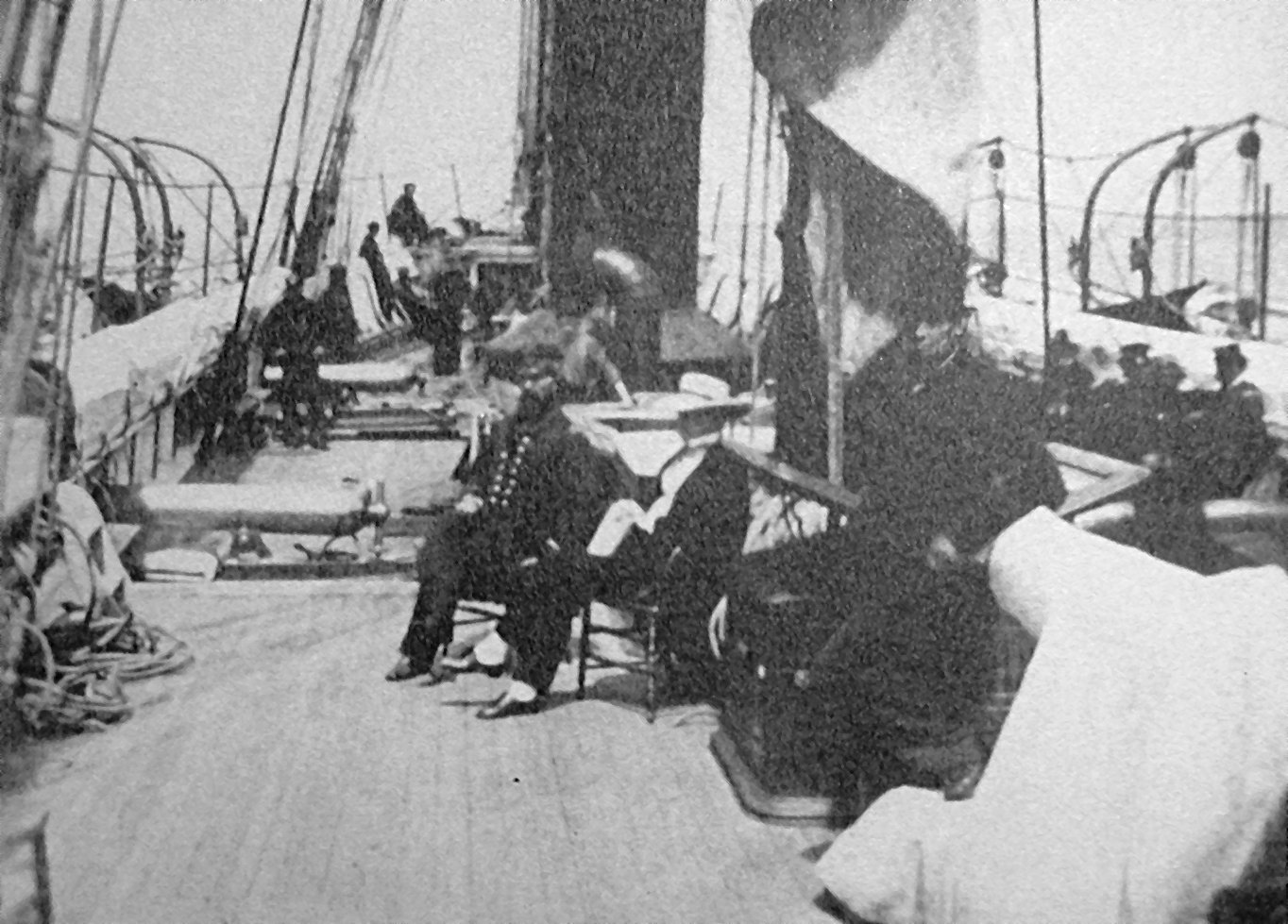
Above we see a great period shot of the two-gunned U.S. Revenue Cutter Wolcott in the Bay area circa 1884, with a good view of the flag established by her namesake. A fine steamer with the lines of a yacht, she made history some 140 years ago this week when she made the service’s first large drug bust.

How large? Like 3,000 pounds of opium hidden in barrels at a salmon cannery in southern Alaska kind of large. And her crew did that after a 736-mile race through a storm to secure the stash.

All in a day’s work.

Meet Wolcott

Our subject was the second cutter to carry the name of Oliver Wolcott Jr., a Yale-educated Continental Army veteran who replaced Alexander Hamilton as Secretary of the Treasury in 1795 after serving as the department’s auditor and Comptroller for several years.

It was while in the office that Wolcott, with the approval of President Adams, selected a design for the Revenue Marine’s Cutter ensign and pennant that he described in a letter to his collectors in 1799 as “consisting of sixteen perpendicular stripes, alternate red and white, the Union of the Ensign to be the Arms of the U.S. in dark blue on a white field .” The stripes stood for the States that comprised the Nation at that time. The original 13 States were commemorated by an arch of 13 blue stars in a white field. The flag was also flown over U.S. Customs Houses until the 1900s and, in 1916, was modified into the USCG flag with the addition of that service’s distinctive insignia. Oddly enough, the only two surviving pre-Civil War Revenue Cutter flags both have 13 stripes. 

A Civil War era Revenue Cutter Flag, carrying the correct, as specified, 16 stripes and 13 stars. 

The first cutter named for Wolcott was a light and fast 4-gun Morris-Taney-class topsail schooner of some 73 feet that entered service in 1831. She was one of 11 U.S. Revenue cutters assigned to cooperate with the Army and Navy in the Mexican-American War, but foundered shortly after.

Our subject was built in 1873 for use on the West Coast (which was inherited after the war with Mexico) and was constructed at the Risdon Iron and Locomotive Works in San Francisco.

Risdon Iron Works, Ship-Yard, Potrero, San Francisco – During Repairs to Steamers “Sonoma,” Alameda,” “Australia” and German Ship “Willie Rickmers.” British Ship “Dowan Hill” Discharging. From the San Francisco History Center, San Francisco Public Library AAC-7340

A 155-foot steamer built of white oak and yellow fir from Oregon and Washington, with bilge keels and iron-wire standing rigging and a sheathed hull, she had a standing (vertical cylinder) surface condensing steam engine with a 34-inch stoke and matching 34-inch diameter.

NHHC NH 309

With a beam of 22 feet and a draft of just over 9, the graceful 235-ton cutter could make an average of nine knots under canvas in fair seas with a good breeze or 9.5 with her engine chugging away.

Port Townsend. USRS Oliver Wolcott, Steam Revenue Cutter, 2-mast, Anchored, ‘Stbdside profile, Bunting flying, 4 July 1888, Jefferson County Historical Society. 2004.117.68

She was built to replace the smaller Civil War-era cutter Wayanda, which had served in Alaskan waters since 1868. As such, when Wolcott was commissioned in the summer of 1873, it was the crew of the laid-up and soon-to-be decommissioned Wayanda that cross-decked, bringing much of their equipment with them, to bring the new cutter to life.

Intended for the often lawless stomping grounds of the Bering Sea Patrol, where she would typically be the only government vessel in any direction for several days steaming, she carried a stand of small arms and cutlasses as well as two mounted guns, which the Coast Guard Historian describes as “of unknown type and caliber.”

It should be noted that during this period in the Territory’s history, the USRCS served largely the same role as the Army’s horse cavalry during the settlement of the Old West, being typically the only armed federal force in most of the region.

While I can find no source that details the two guns Wolcott carried, they may have been brought over from her first crew’s last cutter. Wayanda, famous for what may be a 1863 photo of Lincoln aboard with Seward, was armed with several bronze 12-pounder 4.6-inch smoothbore Dahlgren boat howitzers on slide carriages.

Twelve Pound Dahlgren Boat Howitzer (1856) by Ulric Dahlgren

Ranges for the 12 pdr heavy (at just 5 degrees elevation) were 1,150 yards with shrapnel and 1,085 yards with solid shell, the latter of which was practical for shots across the bow.

As those handy 772-pound muzzleloader percussion-fired guns had a history of being swapped among Navy warships and Revenue cutters as late as the 1890s, it is more than likely that Wolcott shipped out with a couple of those– which may, in turn, have had a connection to the famed President in the stovepipe hat.

Her crew was generally eight officers and 31 enlisted, with an August 1877 list of USRM officers listing the cutter with seven filled billets for a captain, first, second, and third lieutenants; a first and second assistant engineer, as well as an acting second assistant engineer– only missing a chief engineer for the eighth chair in her wardroom.

Walking the beat

Homeported to Port Townsend, Washington Territory, at the northeast tip of the Olympic Peninsula at the gate of Puget Sound and just shy of Vancouver, Wolcott settled into a routine of keeping tabs on the passage of goods and timber from that region in the winter, while sorting north to Alaska in the summer months.

The strategic location was the maritime key to the region, and Wolcott, with her two guns, predated the Army’s Fort Worden coast defense complex, which wouldn’t be built to protect Puget Sound from invasion by sea until the 1890s, as well as the Navy’s Indian Island Magazine.

“Business section, looking down Taylor Street with Central Hotel in the center. Ships: Queen of the Pacific and the Ancon at the Union Dock; U.S. Revenue Cutter Oliver Wolcott and sailing ship Mercury in harbor. Photo taken before 1889. Handwritten across the bottom of the photograph: “Port Townsend, W.T. Mount Rainier.  A. Queen of The Pacific. B. The Ancon. C. U.S. Rev. Cutter, Oliver Wolcott. D. ship Mercury.” Port Angeles Public LibraryPTTNBLDX005

“Streetcar on Water Street, Port Townsend, WA;  five ships in harbor, with United States Revenue Service Cutter (USRSC) Oliver Wolcott the furthest ship on the right.” 1891. Note the Key City Boiler Works. Port Angeles Public Library PTTNBLDX021

In August 1881, the cutter was placed at the disposal of a detachment of officers from the 21st Infantry Regiment under one Capt. S.P. Jocelyn to make a reconnaissance for the military telegraph line to be built between Port Townsend and Cape Flattery.

Little is in the CG Historian’s files on Wolcott but a few interesting tidbits are known, such as the fact that her whole crew deserted in 1882 “for unknown reasons although it was probably due to low wages as her commanding officer at the time, Revenue Captain L. N. Stodder, was then ordered ‘to ship crew at port’ with wages not to exceed $40.00 per month.”

Wolcott was, in August 1883, briefly placed at the disposal of General William Tecumseh Sherman, who, accompanied by Colonel Richard Irving Dodge, his former aide-de-camp, was on a 10,000-mile inspection tour of the West. This included a trip around the Sound and across to Victoria.

The same year, at the request of the British Columbia authorities, as no British man-of-war was available in the Pacific, Wolcott was rushed north of the border to Port Simpson with two magistrates aboard, to prevent an “Indian outbreak” near Metlakahtla, which later turned out to be a false alarm.

Opium buster

In the 1880s, the unlicensed smuggling of opium imported from Canada to the Pacific Northwest was a serious matter– and Wolcott wound up in the thick of it.

As detailed by Captain Daniel A. Laliberte, U.S. Coast Guard (Retired) in a 2016 Proceedings piece, by 1887, 13 factories in Victoria were producing more than 90,000 pounds of the drug per year for legal use, but it was being trafficked across the line into Washington without paying the 1883 Tariff Act fees. The Port Townsend collector of customs, Herbert Beecher, worked hand-in-hand with the Wolcott to seize such illegal shipments.

On 26 December 1885, Beecher and 13 officers and men from Wolcott were waiting for the steamer Idaho to make port, acting on a tip from a confidential informant that the ship was packed to the gills with undeclared opium. After much searching, just 30 pounds were found. A bit of a whomp whomp moment that, once addressed, allowed Idaho to soon weigh anchor and continue about her business, headed to Alaska.

Shortly after, an aggrieved and unpaid crewman who had missed the Idaho’s movements came to Beecher and ratted out the whole operation, upset that he was being cut out of his share of the deal. He advised Idaho had stashed 14 barrels of opium in tins at the Kaasan Bay Salmon Fishery, in Alaska, on the freighter’s last trip north, and he could show them exactly where.

Beecher cabled Washington for permission to dispatch Wolcott in pursuit of the drug stash, with all speed, as Idaho may be headed that way.

With permission received and Wolcott steaming north on 10 January 1886 with a bone in her teeth, the little cutter had to fight out gale-force winds that required her to heave to in Metlakatlah Bay for eight hours.

Finally, on the morning of 14 January, Wolcott arrived at Kaasan Bay and anchored, sending Beecher, accompanied by Lieutenant Rhodes and eight men from the cutter, ashore to the cannery. Soon enough, the 14 barrels were located, and 3,012 pounds of tinned Canadian opium were recovered on U.S. territory, without the taxes paid.

Yes, it sounds piddly, but keep in mind the seamanship involved in racing over 700 miles north through the waters of British Columbia and Alaska that were still relatively ill-charted, in the face of a storm in winter, for a ton and a half drug bust.

Wolcott arrived back in Port Townsend on the 18th, with the drugs aboard, a scene no doubt familiar to Coast Guard cutter crews today.

Article clipped from the Daily Alta, California,19 January 1886:

As detailed by Laliberte:

The total of 3,600 pounds of opium confiscated during the case brought in $45,000 when auctioned on 20 April [1886] by the U.S. Marshal’s Service. This was the first seizure of opium by a U.S. revenue cutter and at the time the largest seizure of the drug in U.S. history, both in terms of amount of opium captured and in value of cargo forfeited. As a result of his further investigation, Beecher was able to present sufficient evidence that the U.S. District Court ordered the Idaho forfeited in December.

Wolcott would later go on to seize the steamer SS George E Starr in 1890, after “Two Chinese subjects, together with a quantity of opium, were discovered secreted on board.”

She also made at least one other record-setting bust, as detailed by the National Coast Guard Museum:

Wolcott would make the service’s first at-sea interdiction that included seizure of both opium and the vessel smuggling it, and the arrest of its crew. Prompted by intelligence from customs agents in Victoria, on Jan. 10, 1889, the Wolcott steamed from Port Townsend to nearby Port Discovery Bay. Once there, the cutter hid behind Clallam Spit, just inside the entrance to the bay. That evening, when the British sloop Emerald entered, one of Wolcott’s boats shot out to intercept it. The Emerald’s master and crew immediately began tossing packages overboard, but the Wolcott’s boarding party quickly scrambled aboard and took control. They found nearly 400 pounds of opium on deck.  A subsequent search of the vessel also revealed 12 undocumented Chinese migrants hidden aboard.

Wolcott was also a savior when needed. In 1895, she rescued the survivors of the schooner Elwood, marooned at Killisnoo in Southeast Alaska, and transported Captain E. E. Wyman and his remaining crew to Sitka.

Then, as time does, it marched on and things changed.

Washington became a state in 1889.

Wolcott changed with the times as well, picking up an all-white scheme, with a buff stack and black masts and cap, late in her career.

Port Townsend. USRS Oliver Wolcott, Steam Revenue Cutter, 2-mast, Anchored, ‘Stbdside profile, In PT harbor, boat alongside. Postcard by Fulton, Jefferson County Historical Society. 1995.334.15

With the service moving on to newer, larger, and more capable steel-hulled gunboats, Wolcott was disposed of, sold on 19 February 1897 to Joshua Green of Seattle, Washington, for $3,050. Her spot was replaced by the cutter Corwin, and her crew dispersed among the service.

Epilogue

Wolcott would go on to serve briefly in commercial service during the Klondike rush, even being hired by an Army mapping expedition in 1898. 

She cracked open her hull in January 1900 on a submerged reef now named after her on the windswept West coast of Kodiak Island, and was abandoned.

In 1909, the importation and use of opium for other than medicinal purposes was outlawed, thus ending the war on drugs (right?)

A third Wolcott, a Defoe-built 100-foot steel-hulled patrol cutter, entered service in 1926 to fight rum-runners. She gained a bit of notoriety out of Pascagoula during the sinking of the defiant bootlegger schooner I’m Alone in 1929. The cutter, which was sold at auction in 1936, is still around as a houseboat in California. 

As for drug busts, hot pursuit, and the vertical striped Cutter flag, those very much remain in vogue.

Meminisse est ad Vivificandum – To Remember is to Keep Alive

***

If you like this column, please consider joining the International Naval Research Organization (INRO), Publishers of Warship International

They are possibly one of the best sources of naval study, images, and fellowship you can find. http://www.warship.org/membership.htm

The International Naval Research Organization is a non-profit corporation dedicated to the encouragement of the study of naval vessels and their histories, principally in the era of iron and steel warships (about 1860 to date). Its purpose is to provide information and a means of contact for those interested in warships.

With more than 50 years of scholarship, Warship International, the written tome of the INRO, has published hundreds of articles, most of which are unique in their sweep and subject.

PRINT still has its place. If you LOVE warships, you should belong.

I’m a member, so should you be!

Heavy Hitter at rest

Some 75 years ago this month.

You could almost mistake her for a slimmed-down Iowa-class battleship at first. That was easy to do with a ship that had a full-load displacement of some 17,000 tons, ran nearly 700 feet long, had a very similar 3+3+3 main gun layout, two funnels, and up to eight inches of armor.

“Aerial of the Baltimore-class heavy cruiser USS Columbus (CA 74) moored to Berth 8, Grand Harbor, Valeta, Malta, altitude 100 feet, S.E. direction.”

Photograph released January 1951. U.S. Navy Photograph, now in the collections of the National Archives. 80-G-426894

The above was during Columbus’s 12 June 1950 to 5 October 1951 stint as flagship for Commander-in-Chief, Naval Forces Eastern Atlantic and Mediterranean (CINCNELM), ADM Robert B. Carney (USNA 1916).

Too late to see combat in WWII, Columbus was still a “war baby,” commissioned 8 June 1945.

Joining the Pacific Fleet five months after VJ Day, she reached the old German China colony of Tsingtao on 13 January 1946 for occupation duty, serving off and on as the cruiser flagship in Chinese waters through June 1947.

Transferring to the Atlantic Fleet in 1948, she often served as a flagship for the 6th Fleet, as seen above. I mean, why wouldn’t she? She was a beautiful ship worthy of an admiral’s flag.

USS Columbus (CA 74) 3 November 1952 Mediterranean Sea USN 482321

After another spin in the Pacific from 1955-1959, she began a three-year reconstruction conversion from an all-gun cruiser to a huge guided missile cruiser, recommissioning as CG-12 in December 1962 to serve for another 14 years as a Cold War sentinel in the Atlantic and Med.

She decommissioned on 31 January 1975, capping just a few months under 30 years of faithful service, but never fired a shot in anger other than her work during the Road’s End scuttling of 24 captured ex-IJN submarines on April Fool’s Day 1946 off Goto-Retto.

Sometimes all you have to do is look mean to get the word across.

Flight to Baghdad

Some 35 years ago today. 17 January 1991. The morning that Desert Shield switched to Desert Storm.

USS Paul Foster (DD-964), USS Missouri (BB-63), and USS Bunker Hill (CG-52) on the horizon at 3 in the morning fire off the first missiles in the opening round of the Iraqi war. Described by one of the junior officers, “It looked like a Roman candle going off on the horizon as the missiles arced over on their way to Iraq.”

Painting, Watercolor on Paper; by John Charles Roach; 1991; Framed Dimensions 34H X 39W. NHHC Accession #: 92-007-J

As for the TLAM slingers, the WWII VJ Day host Missouri decommissioned for the final time in March 1992, just 14 months after her third war, and is a museum on Battleship Row in Pearl within sight of the old Arizona.

Bunker Hill decommissioned in September 2023, capping 37 years of naval service.

Foster?

Foster decommissioned on 14 March 2003 and was turned over before the end of the month to the Naval Surface Warfare Center, Port Hueneme Division, as the U.S. Navy’s new Self Defense Test Ship (SDTS). Ex-Foster still carries her hull number and recently just underwent a shoestring refurb to keep her in service another five years. She is the only ship of her class, the cursed Sprucans, still in existence.

Perhaps, when the Navy is finished with her, she will become a museum.

As seen against the backdrop of the Los Padres National Forest, the Self Defense Test Ship, formerly USS Paul F. Foster (DD-964), supports self-defense engineering, testing, and evaluation for the U.S. Navy. She is homeported at Naval Surface Warfare Center, Port Hueneme Division, located at Naval Base Ventura County in Southern California. (U.S. Navy photo by Eric Parsons/Released)

The SCAR is back in town

After sunsetting the legacy SCAR last year, FN has the new generation of its venerable modular rifle for 2026 – and they are softer recoiling, accept suppressors, and don’t eat scopes anymore.

First fielded in 2008 as sporter (semi-auto) variants of the USSOCOM SOF Combat Assault Rifle, the 16S, 17S, and 20S were a top-shelf option on the commercial market until FN closed that line late last year. Let’s be honest, the original SCAR series was cool but had some issues, and a few needed a significant redesign to fix.

That brings us to the new SCAR line.

The old SCAR, top, compared to a new SCAR, bottom. (All photos: Chris Eger/Guns.com)

Among the new features is that the rifles are optimized for suppressors with a U.S.-standard muzzle profile and barrel shoulder. The platform’s short-stroke gas piston system uses a two-position adjustable gas regulator for improved reliability with cans and different ammo types. The adjustment is accessible via an access port in the heat shield. It works and is an upgrade from the old exposed gas block. Doubling down on the platform being suppressor-friendly as a selling point, FN even designed some new cans just for the SCAR, which we will get to in a separate article.

Another issue with the now-classic SCAR was the tendency to blow out scope crosshairs due to the, well, let’s just call it aggressive recoil. The new SCAR has a new (and lighter) hydraulically buffered modular two-piece bolt carrier that softens recoil. In testing last summer on the range between the old SCAR and the new ones, we could feel the chop decrease and the recoil impulse smooth out significantly.

We found the new SCARs to be much less choppy on the range in testing. 
The new bolt carrier system helps with those tight repeatable groups on the 20S as well, which runs a heavy contour 20-inch barrel that now features 5R precision rifling with hammer-forged/chrome-lined durability. We were able to nail confirmed hits on target at 1,385 yards on a new gen SCAR 20 (6.5CM) in front of a crowd (no pressure) after just a few minutes of instruction.
FN realized that the handguard needed to be updated, so now the upper is a good bit longer with less exposed barrel and uses an integrated rail system, replacing the short M1913 rails with a ton of M-LOK accessory slots at the 3, 6, and 9 o’clock position – even on the SCAR 20S precision rifle. Plus, the 16S and 17S rifles now ship with a colorway-matching vertical foregrip. 
When it comes to the new SCAR 20S, it runs a rubber over-molded Ergo pistol with a generous palmswell and a fully-adjustable stock. 

Triggers have been upgraded with the 20S using an improved FN-designed two-stage precision trigger for better control and feel, providing a 3.5 to 4.5-pound trigger pull. The 17S and 16S have a single-stage trigger that has likewise been updated.

For ergonomics, the pistol grip is now compatible with AR grips and, while the 16S and 17S still ship with the traditional “Ugg Boot” side folding adjustable stock, an AR stock and tube system can be installed.

Yessss.
The new SCARs will accept different stock options. 
This is a thing now for the SCAR…
There is even the possibility of using the SCAR SC stock. 

You also have more QD cups in more places, and all the guns are “Nerch” (Non-Reciprocating Charging Handle or NRCH) variants.

Whereas the old SCAR was kind of limited in the functionality for southpaws, the new ones are fully ambi when it comes to the bolt catch/release, mag release buttons, and safety levers. Even the selector switches are modular now.

When it comes to durability and serviceability, the old SCAR used Hex screws that could strip, whereas the new ones run Torx, among other changes. We were advised that the testing protocol on these guns was no joke, and the new generation SCAR is designed and built with feedback from nearly two decades of end users, many of whom are “tip of the spear” types.

The new SCARs will be available in 15 different variants across the 16S (5.56 in either FDE, Gray, and Black), 17S (6.5CM or 7.62 NATO in FDE, Gray, and Black), and 20S (6.5CM or 7.62 NATO in FDE, Gray, and Black) models.

You gotta love those Gray models. Cue Jean-Baptiste Emanuel Zorg with “my favorite.”

As for those still hungering for the pistol variant, the SCAR 15P, it survived the great SCAR cull of 2025 but didn’t get any of the new updates and is available in 5.56 and .300BLK, with the latter just screaming for a now zero-dollar Form 1 SBR conversion.

Here comes the rough stuff.

While the new and old SCARs look very much the same – and that was done on purpose for continuity – very little is backward compatible between the discontinued traditional models and the new ones. About the only things that are shared/swappable between the two are the NRCH charging sled (if you had an NRCH model), barrels, magazines, the 9310 bolt and firing pin, and some small springs and pins.

If you have an older SCAR and love it, FN wants you to love it still, and they are supporting those guns for at least the foreseeable future. Remember, they are still making and supporting military/LE contract classic SCARs around the world.

MSRP on the new SCARs is comparable to that of the old guns, but they are still a more top-shelf price than, say, your average AR. The new FN SCAR 17S variants run $3,999, while the 16S is slightly cheaper at $3,799, and the long boy, the 20S, is $4,499. Of course, that is the MSRP, and you can bet that the reseller crowd is going to move into high gear with these, so watch out for the gouging. But if your heart is pure and you wish hard enough and look long enough, you could find one that fits the Ugg-sized hole in your gun safe.

Welcome back, SCAR.

We missed you.

Snail Mail

Happy National Send a Handwritten Letter Day, observed on 17 January, is dedicated to the practice of sending handwritten letters, citing Benjamin Franklin’s birthday as the reason for the date, as he was the first postmaster general.

Official period caption, circa October 1987, Persian Gulf: “A yeoman reads a letter from his wife while standing starboard lookout watch at an M2 .50-caliber machine gun station aboard the dock landing ship USS Mount Vernon (LSD 39).”

PH2 (Sw) Jeffrey Elliott. 330-CFD-DN-ST-88-03593

Note the talker set over his head and neck (the Mk II talker helmet is on the deck), the classic Navy dungaree cutoffs, and the sandbagged M60 GPMG on the bow. The Eastland boat shoes– a must-have in the 80s!– are most likely unauthorized while the Ma Deuce is probably older than the lookout.

New: FN 309 Optics-ready Hammer-fired 9mm Pistol

Just in time for SHOT Show, FN has debuted its newest double-stack 9mm pistol: the feature-packed and more affordable FN 309 MRD.

The 309 takes cues from the company’s well-received Reflex series of micro 9s, using a DAO internal hammer operation and direct-mount Shield RMSc/Holosun K/Leupold DPP footprint with adapter plates available for other dots.

The unloaded weight is 18.4 ounces with an empty mag. We found the Reflex in its most svelte form, with 12 rounds of Federal’s Punch JHP 124-grain self-defense loads and no optic, to hit the scales at 23.4 ounces. Shown with a DeSantis Inside Heat, which, although made for the single-stack FN 503, fits it like a glove.

In fact, the FN 309 is basically a Reflex XL, but it is a little bigger, holds more bullets, is $150 cheaper, and uses easy-to-load and more affordable ($20 rather than $50) magazines. Plus, it is easier to rack and very slim, all good things for first-time pistol buyers: the demographic FN is pitching to for this one.

The FN 309
The FN 309 is new for 2026. (Photos: FN)

It has styling similar to the company’s other pistols, but make no mistake, the 309 is its own ecosystem, using proprietary (but inexpensive) 16 and 20-round polymer-bodied magazines. Plus – and this is a win for first-time gun owners and those with reduced hand strength – it requires lower racking force without a gimmick.

The pistol is carry-sized and leans more compact than sub-compact, with a 3.8-inch alloy steel, machine-gun grade, barrel with a recessed target crown. This gives it an overall length of 7.4 inches and a weight, due to its polymer frame, of 22 ounces. The guns ship standard with FN 509 pattern drift-adjustable sights, using an over-molded green fiber-optic front and rounded U-notch rear. Other features include an accessory rail, a reversible magazine release, and multiple safeties, including a firing pin block and trigger safety. Manual safety models will also be available.

The MSRP on the FN 309 is $549, which is likely to be closer to $450 at retailers once supply starts flowing.

The FN 309
We were able to travel to South Carolina last summer to check out the 309 “in progress,” shooting a table full of early production pistols along with a group of other gun media. (Photos unless noted: Chris Eger/Guns.com)
The FN 309
Note the polymer magazines in 16 and 20-round variants, which FN advises will be inexpensive (think $25) at retail. Compare that to FN 509 mags, which run $50-$90 depending on the model. 
The FN 309
The FN 309 is a simple design and field strips without pulling the trigger – a big deal for a lot of users. 
The FN 309
Note the internal hammer-fired operation of the FN 309. 

The gun shot well in initial testing, with the Guns.com crew putting about 500 rounds through a couple of pistols over the course of a couple of hours. A relay team ran 1,160 rounds on a very hot torture test gun without a serious issue, so there is definitely a potential for the 309 to be something FN is proud to have in its catalog.

The gun is pitched as a more entry-level pistol than the company’s duty-grade 509s, which start at $750 for basic vanilla models and run to $1,600 in the more bespoke Edge package guns. Even the 15+1 round FN Reflex XL MRD has a suggested ask of $719.

“Many gun buyers don’t see FN as an option, and we wanted to change that perception by making the brand accessible to people looking to spend $500 on a 9mm pistol,” said Chris Johnson, Senior Product Manager for Pistols for FN America, LLC. “With the FN 309 MRD, we now have a trustworthy, easy-to-use pistol perfect for new gun buyers and those looking to purchase their first FN. For us, it’s not just a new product, it’s FN’s commitment to offering the everyday user peace of mind and FN performance.”

The FN 309 ships with a 16+1-round flush-fit and 20+1-round extended magazine, with options for 10-rounders in restricted states.

We have a review model inbound, so expect to see more on the 309 in the coming weeks.

Plus, if you like this, you are going to love what is announced later this morning.

MK 75 OTO Echoes

The crew of Coast Guard Cutter Northland conducts a live firing of the MK 75 76mm weapons system while underway, on September 20, 2020, in the Atlantic Ocean. (Photo: USCG)

As we have discussed, the MK 75 OTO Melera 76/62C Compact gun has been sunset by the U.S. Navy and USCG after a 50-year-run, with the Ordnance Shop at the Coast Guard Yard taking ownership of the remnants of the program, tapped to support the guns on FFG-7 frigates and 378-foot cutters transferred overseas.

The CG Yard Ordnance Repair Facility recently completed a five-month overhaul of an MK75 gun mount for an international partner.

“This effort is part of a larger Foreign Military Sale Program, which prioritizes robust national security partnerships and U.S. global leadership.

The Yard is the only certified MK75 overhaul facility in the U.S. The Ordnance shop manufacturers and repairs critical components from decommissioned Navy donor guns, since these parts are no longer manufactured. After the overhaul, the weapon is boxed and shipped for transit to the international partner.”

Before:

After:

And packed up for return shipment.

Death in a box!

As to why it takes five months to refirb one of these mounts:

It takes that long because the shop has to remove/ship it, pre test, completely tear down, sand blasted all parts, send part for plating, source or get parts made that are no longer in the stock system, repair all corrosion, overhaul all hydraulic components with new gaskets/hardware, paint / repair everything, start assembling have QI come in for major sub component test, finish assembly, start the ISMAT / ISMEP testing, round 100 rounds, package the system, ship it, install it on new cutter/ship then Test it again on the ship and this is completed with up to a 3-4 man team while training new workers. It’s a big team effort, but rewarding the workers in that shop are really top-notch.

« Older Entries Recent Entries »