How can you not love Blade Runner
I mean, come on….Phillip K Dick…..sci-fi noir at its best.
I mean, come on….Phillip K Dick…..sci-fi noir at its best.
Here at LSOZI, we are going to take out every Wednesday for a look at the old steam/diesel navies of the 1859-1946 time period and will profile a different ship each week. – Christopher Eger

Here we see a rendering of a very interesting boat in the Italian Naval service during World War One. Part tank, part torpedo boat, it was designed to crawl over the nets protecting enemy naval bases, then punch holes in the bad guy’s ships, sending them to the bottom and taking them out of the war.
When the Great War started, Italy, which was officially an ally of Germany and Austria, flung its hands in the air and proclaimed its official neutrality. You see Italy bordered France to the west, faced the might of the combined British and French fleets in the Mediterranean, and had very little to gain for coming into the war for the two Kaisers, with everything to lose. After eight months of wooing the Allies, Italy double-crossed their buddies and cast their lot with the West. Although the Italian Army found itself in a bloody stalemate in the Alps against the Austrian army that brought nothing but misery, their navy served a genuine purpose in bottling up the rather large Austrian fleet in the Adriatic. This freed up the British and French forces in the Med to move into the Atlantic to face the Germans.

Just look at all of those pretty Austrian battleships at anchor in Pula harbor. Here you see Austro-Hungarian dreadnought battleships ( Tegetthoff class ) at the roadstead in Pula Croatia , Which Was then a part of the Austro-Hungarian Empire.
For most of 1915, 1916, and 1917 the Italian Navy, (Regia Marina) was content with holding the line across the Adriatic and keeping the Austrians in their ports. Then in 1918, they decided to go north and sink the Kaiser’s battleships where they slept. Two Italian torpedo boats made it into the lightly defended harbor at Trieste and sank the old battleship, Wien. The problem was, the Austrians had years to fortify their largest naval base at Pola (now Pula in Croatia) with anti-submarine nets, anti-torpedo nets, underwater obstacles, coastal artillery, and naval mines. To penetrate these harbors, the Italians had to come up with something different.

They came up with the “Barchino Salvatore” or “punt jumper”. These fifty-foot-long wooden hulled boats had a flat bottom and two tracks along each side of the hull, port, and starboard. Each track held a series of metal crampon hooks and was turned by a set of pulleys fore and aft, propelled by a pair of 5hp electric motors. This unusual boat 8-ton could literally crawl over the rows of torpedo nets and anti-submarine nets that separated the Adriatic from the protected harbor. Once over the nets, the boat would drop into the inner harbor, where it would transit, using its spinning tracks to move like a side-mounted paddle wheel, at 4 knots. Then, lining up with an Austrian battleship at anchor, it would send two torpedoes into its side before beating feet (err, tracks) back out to sea. Of course, this required the punt jumper to be towed to Pola and back by a larger ship, but once there, it was good to go.

The Italians built four of these boats and named them the Cavalletta (Grasshopper), Locusta (Locust), Pulce (Flea), and Grillo (Cricket). The were made a part of MAS 95 and 96 squadrons, which became famous for irregular naval actions in the war.
Four times in early May 1918, two Italian destroyers, two torpedo boats, and the punt jumper Grillo left the Italian side of the Adriatic and made their way in convoy to Pula. On the first three of those attempts, conditions were less than ideal Then on the night of May 13-14, 1918, the Grillo made a go of it with a mission to make it through Pola harbor. Crewed by Stoker Giuseppe Corrias, Seaman Angelino Berardinelli, and commanded by Lieutenant CC Pellegrini, the Grillo made it through four of the five Austrian obstruction nets but got caught on the last one. These obstacles were rows of timber balks and wire hawsers six feet apart.
Four out of five doesn’t count in harbor defenses and the Austrians opened fire on the helpless Grillo when it was caught in the searchlights, which sunk.

Italian crawling MTB Grillo after the attack on Pola on 13 May 1918

Pellegrini
Her three-man crew was captured and ended the war as POWs, winning the Italian Gold Medal for Military Valor.

The Austrians’ Grillo clone
The Austrians thought it interesting enough to make one of their own as a testbed to make sure the Italians couldn’t get successful using one of these tank-boats in the future.
With that in mind, the Italians shelved the other three and concentrated on human torpedoes, which they used to penetrate Pola in November and sink the battleship Viribus Unitis (20,000 t) and the nearby steamer Wien (7,400 t) in the last days of the war.

Specs:
Displacement 8 tons
Length 16.0 m (52.29ft)
Width 3,10 m (10.17 ft)
Draft 0.75 m (2.46ft)
Propulsion 2 electric motors on the axis for 10 HP total
Speed 4 knots
Range 30 mn at 4 knots
Crew 4
Armament 2x 450mm torpedoes
If you liked this column, please consider joining the International Naval Research Organization (INRO)
They are possibly one of the best sources of naval lore http://www.warship.org/naval.htm
The International Naval Research Organization is a non-profit corporation dedicated to the encouragement of the study of naval vessels and their histories, principally in the era of iron and steel warships (about 1860 to date). Its purpose is to provide information and a means of contact for those interested in warships.
Nearing their 50th Anniversary, Warship International, the written tome of the INRO has published hundreds of articles, most of which are unique in their sweep and subject.
I’m a member, so should you be!
You can expect that he will be allowed to retire soon. We cant have anyone talking about the emperors clothes or lack thereof.


Invented by developed by William Ewart Fairbairn and Eric Anthony Sykes after seeing the rough side of the world and used by the Commandos in WWII, then by the likes of the SAS, SBS, etc for generations afterward, the good old-fashioned FS knife is straight up and down deadly.
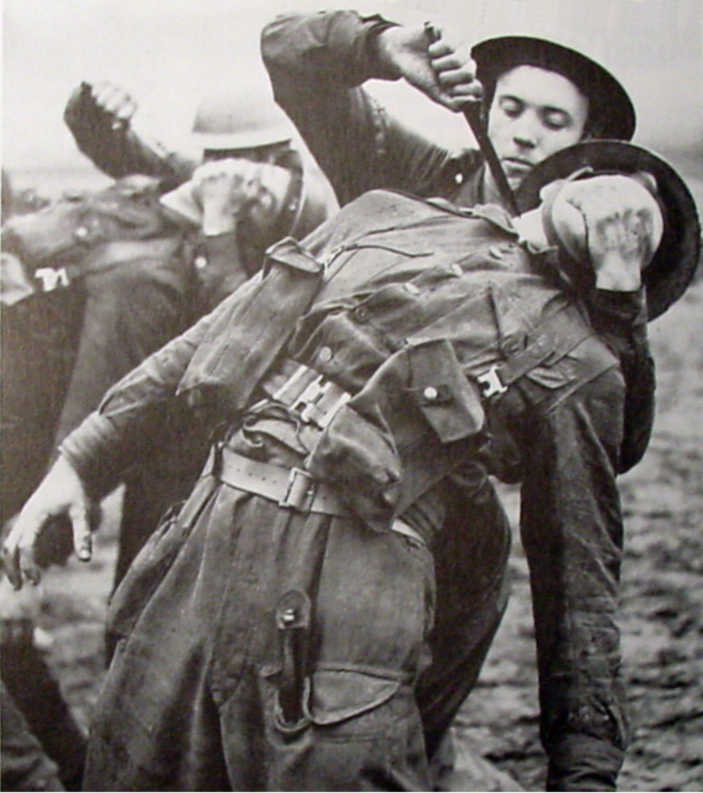
If you don’t believe me, just ask the commando interviewed below. The old fighter may be a little thicker and a little slower than he was in 1944, but don’t think he can’t still use that fighting knife if he had to.
Since World War 2, the United States Navy has owned the oceans and will likely continue to do so for the near future. Although the Navy has thousands of missiles, modern jet attack aircraft, nuclear powered submarines, and advanced torpedoes, most surface combatants still carry a big gun up front as a hood ornament.

Ever since 1363, when cannon fired from a ship at sea killed a Danish king on another; naval ships have carried large caliber guns. The United States only became a world power in 1898 after the proper application of the US Navy’s big guns on its battleships and cruisers against Spanish fleets in the Caribbean and Pacific during the Spanish American War. The First World War started after a naval arms race over building large-gunned battleships increased tensions to a point of no return. When the Japanese attacked Pearl Harbor at the start of World War 2, they did so to target Battleship Row, to take America’s big guns out of the fight.
Although the number of battleships at sea has dropped to zero from then to now, the US Navy is one of the few forces in the world that still has cruisers and destroyers. Moreover, all of these ships still carry 5-inch (127mm) Mk 45 naval rifles. Moreover, these guns are far from obsolete.
Read the rest in my column at Firearms Talk.com

Was checking my publisher’s site (Necro Publications), and see that the hardcover edition of Last Stand on Zombie Island, possibly the best modern zombie survival story (shameless self-promotion) is sold out.

Don’t worry though! You can still get it as a trade paperback (on sale for $9.95!) and an ebook (for $2.99)
Click the links, click them now
Hahahah.
With the impending retirement of the HMS Illustrious, Britannia’s last ‘harrier carrier’ next year, the vultures are already circling the majestic ship.
“The Ministry of Defence’s Disposal Services Authority (DSA) has today launched a competition which will seek innovative re-use bids to retain the ship in the UK, with part or all of it developed for heritage purposes.”
An industry day will be held in January for organisations “able to put forward mature and viable proposals, in keeping with the role and history of the Invincible class of ships”. That would be followed by a “full and open competitive process”, he said.
But Dunne added: “In the event that no suitable re-use bids with a heritage element are submitted, the DSA will open up the competition by seeking proposals for other uses or recycling.”

The 689-foot Lusty had served faithfully in the Cold War, Afghanistan, and evacuated civilians when both Sierra Leone and Lebanon went to pot.
Her two sisters, Invincible and Ark Royal, were both sold for scrap after museum prospects fell through. Since the RN sold the last Sea Harriers to the US Marine Corps, she has been helicopter only.
While walking around the Dolomite Mountains at an Italian ski resort, a tourist found what he thought was a bundle of rags poking up through the ice and snow.
Well, turns out that it was an Austrian mountain jaeger who was lost during the frozen combat in the Alps between Italy and Austria in World War One.
Hopefully the soldier will finally get a chance to go home now.

During the opening shots of the Cold War, Stalin had the B-29 Superfortress reverse-engineered to make the first Russki intercontinental bomber. The Chinese, looking to get into aircraft carriers, bought the old HMS Melbourne for scrap in the 1970s then examined her for twenty years before moving on to Russian pre-owned casino carriers.
Well, it looks as if the Chinese have gone the Stalin route and cloned a AH-64 Apache.
No one has seen it fly yet, and it may just be a mock-up, but still. Holy xerox batman!


In 1956 the US Air Force needed a shit hot interceptor to be able to tackle incoming waves of Soviet intercontinental bombers sneaking in over the Arctic Circle to turn the homeland to glass. You see 1956 was a simpler time. Most of the Soviet bombers were still prop driven, most fighter jets were armed with cannons and machine-guns.
Well, the Dart was given a nuke of its own.
The Genie.

An air-to-air right side view of an F-106 Delta Dart aircraft after firing an ATR-2A missile over a range. An auxiliary fuel tank is on each wing. The aircraft is assigned to the 194th Fighter-Interceptor Squadron, California Air National Guard. After 1970, most Darts were flown by the Air Guard in North American Air Defense roles
Since ‘close enough’ only counts in horseshoes and atomic weapons, the Dart was equipped with the radical new AIR/ATR-2 Genie nuclear rocket. Carrying a 1.5 kiloton nuclear warhead, the rocket could zip out to ranges of six miles or so away and then detonate in mid-air.

With one of these, the Delta Dart could hustle to a formation of incoming Russkis bombers, rub the Genie’s lamp, then turn away and high tail it out of there before it went off– leaving the slower Soviet bombers to disappear in a cloud of radioactive dust as if by magic somewhere 20,000 feet over North Dakota (sorry North Dakota).

To outrun its own weapon’s explosion, the Dart was fast. So fast that in 1959 one set a world speed record of 1,525.96 mph (2,455.79 km/h) in a Delta Dart at 40,500 ft. One of the reasons it was so fast was that it had a streamlined weapons storage bay (like the F-22 today). The French Dassault Mirage III, which looks viably similar, never came within 200mphs flight speed of the Dart. The Soviets didn’t beat it until the MIG-25 came out in the mid-1960s.
Over 340 Darts came off the line and served, primarily as the principal air defense interceptor of NORAD in the continental USA, Alaska, and Iceland, as well as brief periods in Germany, Thailand (during Vietnam) and South Korea. Besides the Genie, ‘the Six’ could carry the AIM-26 Super Falcon and other air-to-air missiles.
The most famous Six was known as the Cornfield Bomber (although it was an interceptor and landed in a wheat field) after its pilot ejected over Montana and it continued on its ghost flight until it ran out of fuel, landing remarkably well on its own in a wheat field.
When the Cold War ended in 1988, the Delta Dart was pulled from the front line, a relic, and some 32 examples are still around. The figure would have been more but some 190 Darts, proven good at ghostriding after the Cornfield Bomber incident, were converted to unmanned drones in the 1990s and shot up over the Gulf of Mexico.

Genies, ghosts, darts, and sixes. Gone but not forgotten.